
 Wine Advisor




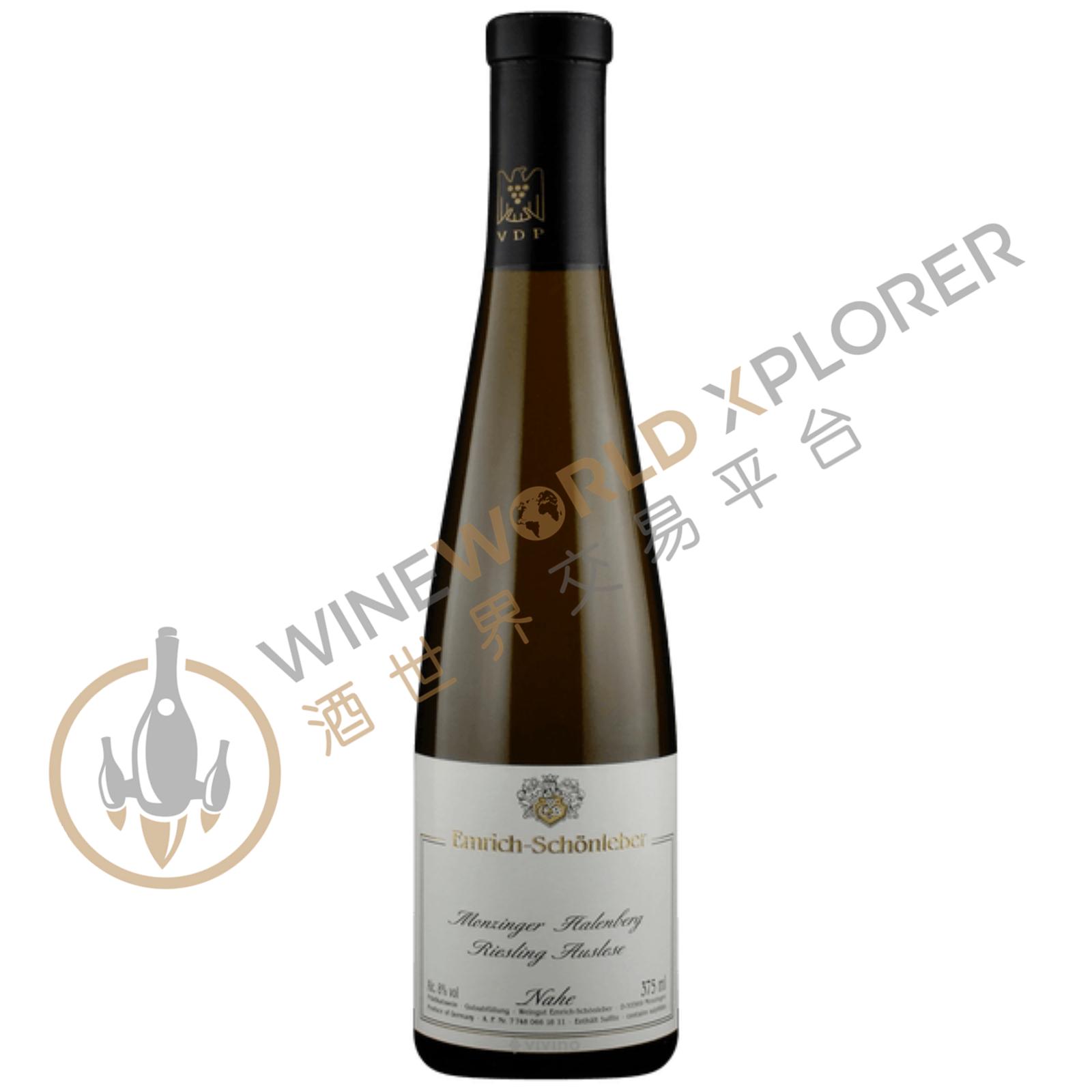
Emrich Schonleber, Monzinger Halenberg Riesling Auslese 2018
 View analysis


Description
Emrich Schonleber, Riesling Auslese, Monzinger Halenberg, Nahe, White, 2012
Tasting notes

Reviewed by: David Schildknecht
It would have been a waste, opined Schönleber, not to have done something with the impeccably clean but overripe and lightly desiccated grapes that informed this Auslese, and which would have added too much potential alcohol to the Grosses Gewächs. But there wasn’t much more juice in them than in those that had been set aside for BA and TBA – too little, in fact, for a proper day’s pressing – so subsequent incoming bunches that harbored a higher percentage of juicy grapes were added in. Peach, pear, orange and pineapple combine for an intense fresh-fruit concentrate at once luscious and tangy. The underlying feel is seductively silken, but orange zest and cinnamon lend invigorating sizzle. Mouthwatering salinity adds to the delights of a vibrant, ringingly clear finish.
About the Producer
1815"This time people were boasting of one of their local wines, called 'Monzinger'," noted Johann Wolfgang von Goethe in 1815. "They say it runs down the throat with such ease and pleasure, that you only realise its bewildering effect too late. 1960sUntil the 1960s, our estate was a mixed operation comprising agriculture, livestock and winegrowing. This form of diversification was common practice at a time when the risk of bad grape harvests (due to spring frosts, poor flowering, fungal diseases, etc.) was still very high. Only the most affluent families (often from industrialist backgrounds) could afford to grow wine and nothing else. 1965-1985From 1965 to 1985, Wilhelm Schönleber (a native Swabian from southern Germany), followed by son Werner Schönleber, turned the property into a purely winegrowing estate, expanding the vineyard area from approximately 2 to 10 hectares. With an increasing share of vineyard space devoted to Riesling and a continually improving portfolio of vineyard sites, the estate first made it onto the list of "Germany's top 100 wineries. Today the farm 20 hectares of vineyard. Riesling currently accounts for 85% of our vines, supplemented by Grauburgunder (Pinot Gris) and Weissburgunder (Pinot Blanc)
