
 Wine Advisor



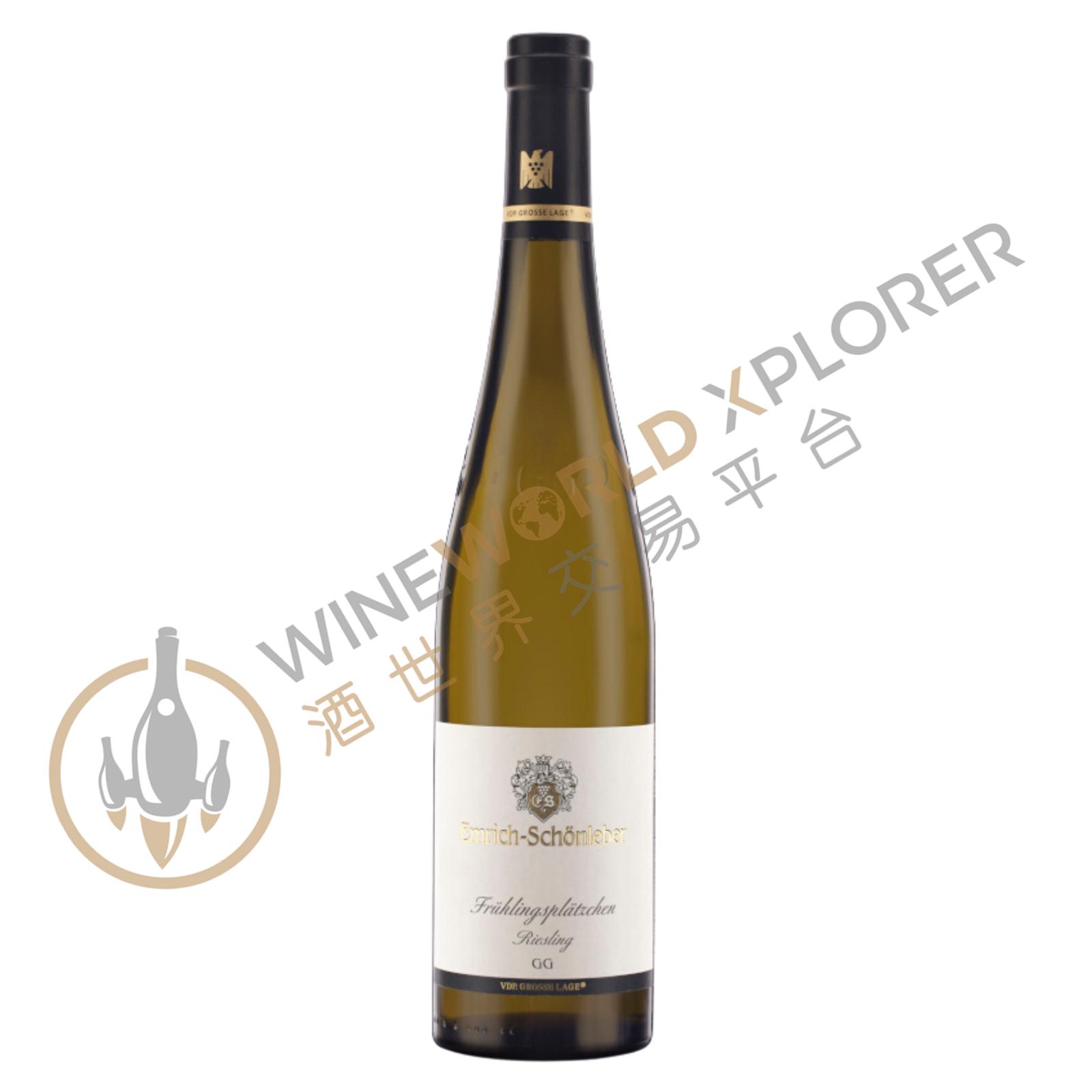
Emrich Schonleber, Monzinger Fruhlingsplatzchen Riesling Grosses Gewachs 2009
 View analysis


Description
Tasting notes

Reviewed by: David Schildknecht
Grapefruit, lime, peat, peach kernel, and a kelp-like and alkaline as well as saline intimation of things maritime combine for aromas and flavors of utter intrigue and mysterious enticement from Schonlebers’ 2009 Monzinger Fruhlingsplatzchen Riesling Grosses Gewachs. There is a nearly explosively dynamic of fruit and mineral elements in this luscious, bright, densely-concentrated yet buoyant and refreshing Riesling. I found my salivary glands pumping and my tongue fluttering after reluctantly spitting this remarkable libation, and its head-scratching complexity of (for lack of another collective expression) “mineral” elements should prove utterly engrossing for at least the next 10-12 years. Werner and Frank Schonleber harvested through nearly the entire month of October, and noted that levels of sugar and total acidity remained fairly constant, while flavors kept improving and malic acid diminishing in favor of tartaric. Speaking of improving, it’s hard for these two vintners to much-improve their by now phenomenal batting average, but no Riesling lover is likely to suffer the least disappointment by buying bottles of Emrich-Schonleber 2009s. Especially at its dry end, this is a collection to describe which seems to call for an extended mineral vocabulary that doesn’t even exist in English or German! And in nobly sweet echelons, the small amount of Riesling the Schonlebers rendered is strikingly successful and informed by an ample if mysterious measure of sheer juiciness. About the absence of Eiswein, Frank Schonleber notes: “We had the feeling that ripeness had simply advanced too far in 2009 to justify leaving any grapes hanging in anticipation of frost.” Imported by Sussex Wine Merchants, Moorestown, NJ; tel. (856) 608 9644; also imported by Dee Vine Wines, San Francisco, CA tel. (877) 389- 9463
About the Producer
1815"This time people were boasting of one of their local wines, called 'Monzinger'," noted Johann Wolfgang von Goethe in 1815. "They say it runs down the throat with such ease and pleasure, that you only realise its bewildering effect too late. 1960sUntil the 1960s, our estate was a mixed operation comprising agriculture, livestock and winegrowing. This form of diversification was common practice at a time when the risk of bad grape harvests (due to spring frosts, poor flowering, fungal diseases, etc.) was still very high. Only the most affluent families (often from industrialist backgrounds) could afford to grow wine and nothing else. 1965-1985From 1965 to 1985, Wilhelm Schönleber (a native Swabian from southern Germany), followed by son Werner Schönleber, turned the property into a purely winegrowing estate, expanding the vineyard area from approximately 2 to 10 hectares. With an increasing share of vineyard space devoted to Riesling and a continually improving portfolio of vineyard sites, the estate first made it onto the list of "Germany's top 100 wineries. Today the farm 20 hectares of vineyard. Riesling currently accounts for 85% of our vines, supplemented by Grauburgunder (Pinot Gris) and Weissburgunder (Pinot Blanc)
