
 Wine Advisor




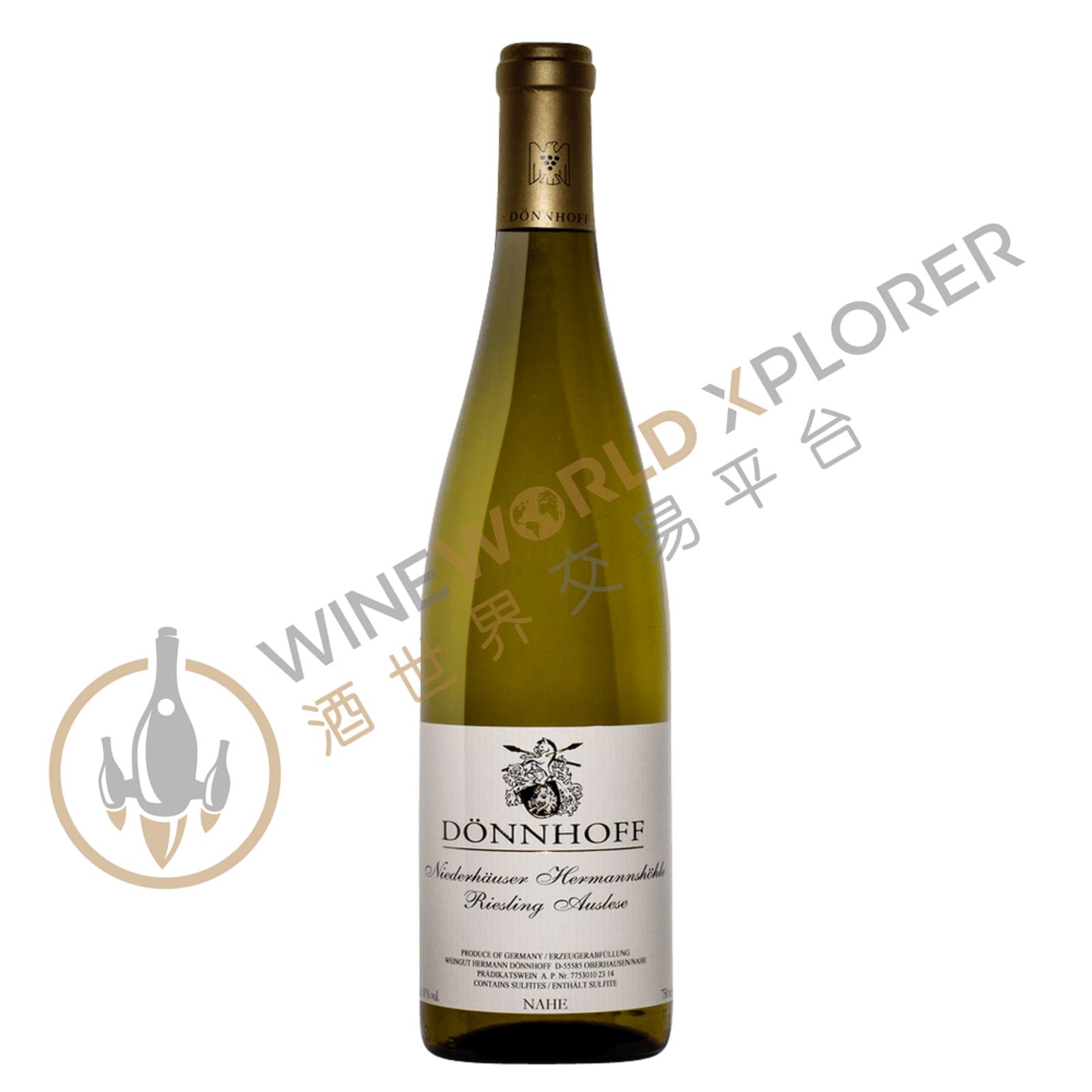
Donnhoff, Niederhauser Hermannshohle Riesling Auslese 2007
 View analysis


Description
Tasting notes

Reviewed by: David Schildknecht
Donnhoff's 2007 Niederhauser Hermannshohle Riesling Auslese leads with an unusually floral aromatic display, and the palate impression is so honeyed you'd think it were Bienenauslese (selected by bees). There is remarkable density here, with site-typical layering of flowers, orchard fruits, citrus, berries, along with smoky, peat-like, stony mineral suggestions that become more prominent as the wine takes on air. The finish is almost luxuriantly rich by Hermannshohle standards. But I am sure this wine will find more to say with time and not fall silent for 30 years or more. While Donnhoff returned to his usual humility in characterizing the latest vintage - following an atypically unabashed outbreak of enthusiasm in describing his indeed amazing collection of 2006s - it is clear that the 2007s delight him in a similar way, as outstanding representations of their respective sites at Spatlese ripeness. (Note, incidentally, that the Pradikat has been removed from any dry wines here, in keeping with a new convention of the Nahe branch of the VDP growers- association.) -Within that range of ripeness,- he submits, -one best-recognizes the site. Here you have nothing exaggerated, but instead a normal harvest, meaning a documentation of the vineyards, each a different face on the landscape. They all went to the same school and had the same opportunities- he adds, gesturing to the long row of Spatlesen on the tasting table, and alluding to his own role as well as the vintage-s. -It was a bit intimidating this year at harvest,- he added, -because when the grapes are perfect, you can only make mistakes.- I had the rare fortune to taste this collection twice, and like so many 2007s (a comment that even more growers made about their 2008s) the wines were much more impressive in September than in Spring. A 2007 Hermannshohle Trockenbeerenauslese, by the way, is still trying to become wine after two years. Terry Theise Estate Selections, imported by Michael Skurnik Wines, Inc., Syosset, NY; tel. (516) 677-9300
About the Producer
The Dönnhoff family first came to the Nahe region 250 years ago, establishing a traditional farm in the village of Oberhäusen an der Nahe, which included livestock and vegetable gardens in addition to some grape growing. Oberhäusen and this part of the Nahe river valley is very pastoral; it feels far away from the relative hustle and bustle of the Rheingau and wine tourism. The countryside is serene and beautiful, marked by steep hillside vineyards in the succession of villages following the river from Norheim to Niederhausen, through Oberhäusen, ending in Schlössbockelheim. The estate was started by Helmut Dönnhoff’s grandfather, Hermann, in the 1920s. Helmut took over from his father, Hermann Jr. in 1966; at that time there were only four hectares under vine and still quite a bit of farmland, which was rented out. In 1971, the farmland was sold and Helmut turned his full attention to producing quality wine. The Estate has grown to 25 hectares but both father and son feel that this is as large as they want to be; more growth would mean less time in the vineyards and cellar, where they feel most at home and in their element. Cornelius is as thoughtful as his father and the two share the same view on winemaking, viticulture, and taste in wine; balance and “Das ganze ding muss klingen – The whole thing must be sound” are at the center of their philosophy. To preserve laser-like focus and clarity in the wines, the grapes are pressed as soon as possible – within 3 hours of picking. Wines are fermented in traditional German casks (1200 L stuck and 2400 L doppelstuck) as well as stainless steel with spontaneous fermentations. Donnhoff’s cellar is unique in its capacity to hold all of its production entirely in stainless steel or in cask, allowing for the ideal élevage for any wine at any point during a vintage.
