
 Wine Advisor



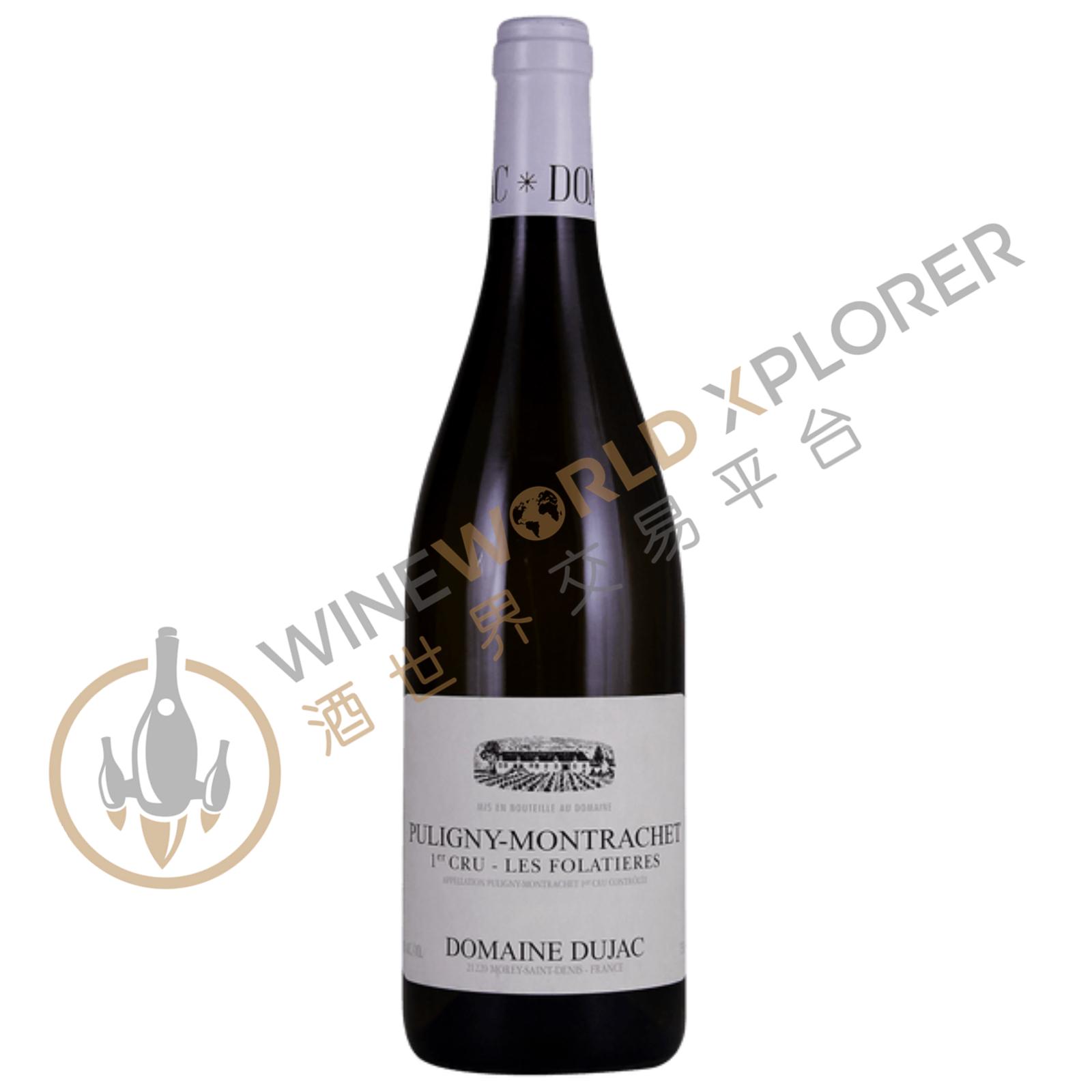
Domaine Dujac, Puligny Montrachet 1er Cru Les Folatieres 2022
 View analysis


Description
Tasting notes

Reviewed by: Neal Martin
The 2022 Puligny-Montrachet Les Folatières 1er Cru has quite a generous bouquet with mainly yellow fruit and a touch of lemon verbena, focused with hints of lime developing in the glass. The palate is well-balanced, with a twist of sour lemon on the entry. There’s fine weight, cohesive, maybe requiring a little more nerve towards the finish. However, there is certainly brightness here, and I feel it will gain more energy by the time of bottling. On par with the previous vintage.
Reviewed by: William Kelley
Aromas of pear, crushed mint, white flowers, hazelnuts and bread dough introduce Dujac's 2022 Puligny-Montrachet 1er Cru Les Folatières, a medium to full-bodied, satiny and rich white that's thick and layered, with good depth at the core and an anise-inflected finish.
About the Producer
Domaine Dujac is managed by the Seysses family. It was founded in 1967 by Jacque Seyesses. At the beginning, Château Dujac had only 4.5 hectares of vineyards in Morey-Saint-Denis. The vineyards were expanded with the purchase of Echezeaux, Bonnes MaresChambertin, Romanee St Vivant and Vosene-Romanee. The estate also owns 1.95 hectares of vineyards in the Clos de la Roche, where the vines are on average 45 to 50 years old. The estate also has 1.45 hectares of vineyards in Clos Saint-Denis, with vines of an average age of 45 to 50 years. In 2005, Château Dujac, together with Chateau de Puligny-Montrachet, acquired Domaine Charles Thomas, acquiring Charles Thomas' shares in the vineyards of Chambertin, Vosne- Romanee and other vineyards. However, the estate sold some of its vineyards after the purchase in order to finance the purchase. However, this acquisition allowed the estate to expand to around 15.5 hectares. Under Jacques' leadership, Château Dujac has developed very well. The grapes were pressed whole and the must was fermented in new oak barrels, and in 1999, when Jacques handed over the running of the estate to his son, the way the estate was made changed dramatically: the grapes were sometimes destemmed and the barrels used for fermentation were probably only 25% new oak. However, the estate's Grand Cru wines are still matured in new oak barrels, while the Grand Cru wines are matured in 60% to 80% new oak barrels. Bottling usually takes place in February or March of the following year. The estate produces around 4,650 bottles/hectare of wine.
