
 Wine Advisor



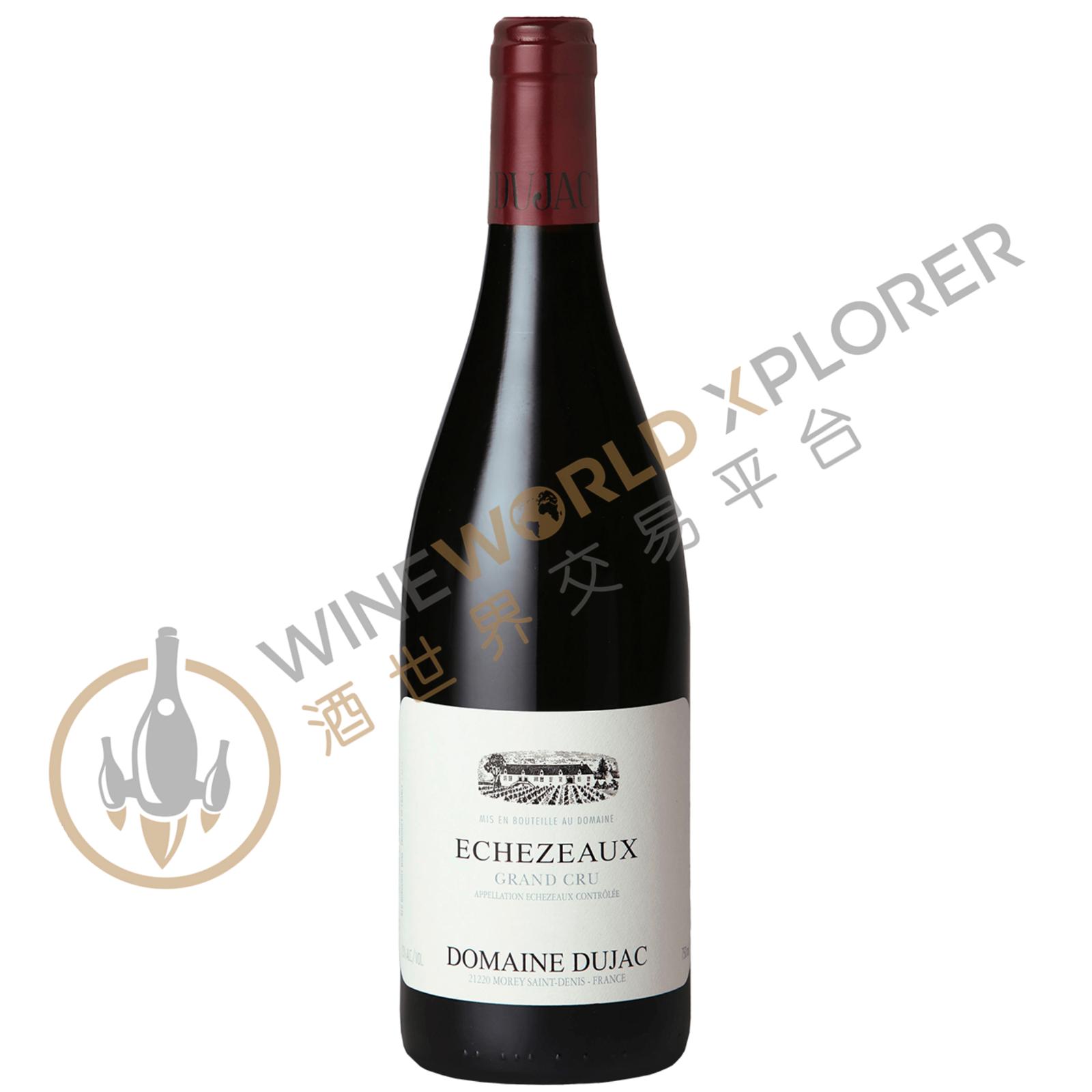
Domaine Dujac, Echezeaux Grand Cru 2015
 View analysis


Description
Tasting notes

Reviewed by: Neal Martin
The 2015 Echézeaux Grand Cru has a sense of brightness on the nose that actually reminded me of Domaine de la Romanée-Conti! There is a sense of effervescence and vibrancy in situ, conveying a wine with a sense of purpose. With time, there is a touch of wilted rose petal complementing the fruit aromas. The palate is medium-bodied with succulent ripe red berry fruit, orange pith and a touch of sea salt. It shows very good length with a very precise finish, a "complete" Echézeaux that does much to impress.
Reviewed by: William Kelley
The excellent 2015 Echezeaux Grand Cru reveals a youthful bouquet of sweet red and black fruit, wood smoke, grilled squab and spice. On the palate, the wine is full-bodied, ample and expansive, cutting a broad swathe, its tannins fine-grained and its fruit juicy and succulent, more structurally open-knit than the domaine's grands crus from Morey and Chambolle.
Reviewed by: Stephen Tanzer
Bright, dark red. Perfumed aromas of maraschino cherry, dried flowers and red licorice. Silky, juicy and fine-grained, conveying terrific intensity and a light touch to its red fruit, milk chocolate and mint flavors. The tactile, palate-staining finish features noble tannins. I find this more typical and more aromatic than the 2016 version. The yield here was under 25 hectoliters per hectare, according to Jeremy Seysses, but the wine showed a distinctly relaxed quality.
Reviewed by: Neal Martin
The excellent 2015 Echezeaux Grand Cru reveals a youthful bouquet of sweet red and black fruit, wood smoke, grilled squab and spice. On the palate, the wine is full-bodied, ample and expansive, cutting a broad swathe, its tannins fine-grained and its fruit juicy and succulent, more structurally open-knit than the domaine's grands crus from Morey and Chambolle.
About the Producer
Domaine Dujac is managed by the Seysses family. It was founded in 1967 by Jacque Seyesses. At the beginning, Château Dujac had only 4.5 hectares of vineyards in Morey-Saint-Denis. The vineyards were expanded with the purchase of Echezeaux, Bonnes MaresChambertin, Romanee St Vivant and Vosene-Romanee. The estate also owns 1.95 hectares of vineyards in the Clos de la Roche, where the vines are on average 45 to 50 years old. The estate also has 1.45 hectares of vineyards in Clos Saint-Denis, with vines of an average age of 45 to 50 years. In 2005, Château Dujac, together with Chateau de Puligny-Montrachet, acquired Domaine Charles Thomas, acquiring Charles Thomas' shares in the vineyards of Chambertin, Vosne- Romanee and other vineyards. However, the estate sold some of its vineyards after the purchase in order to finance the purchase. However, this acquisition allowed the estate to expand to around 15.5 hectares. Under Jacques' leadership, Château Dujac has developed very well. The grapes were pressed whole and the must was fermented in new oak barrels, and in 1999, when Jacques handed over the running of the estate to his son, the way the estate was made changed dramatically: the grapes were sometimes destemmed and the barrels used for fermentation were probably only 25% new oak. However, the estate's Grand Cru wines are still matured in new oak barrels, while the Grand Cru wines are matured in 60% to 80% new oak barrels. Bottling usually takes place in February or March of the following year. The estate produces around 4,650 bottles/hectare of wine.
