
 Wine Advisor



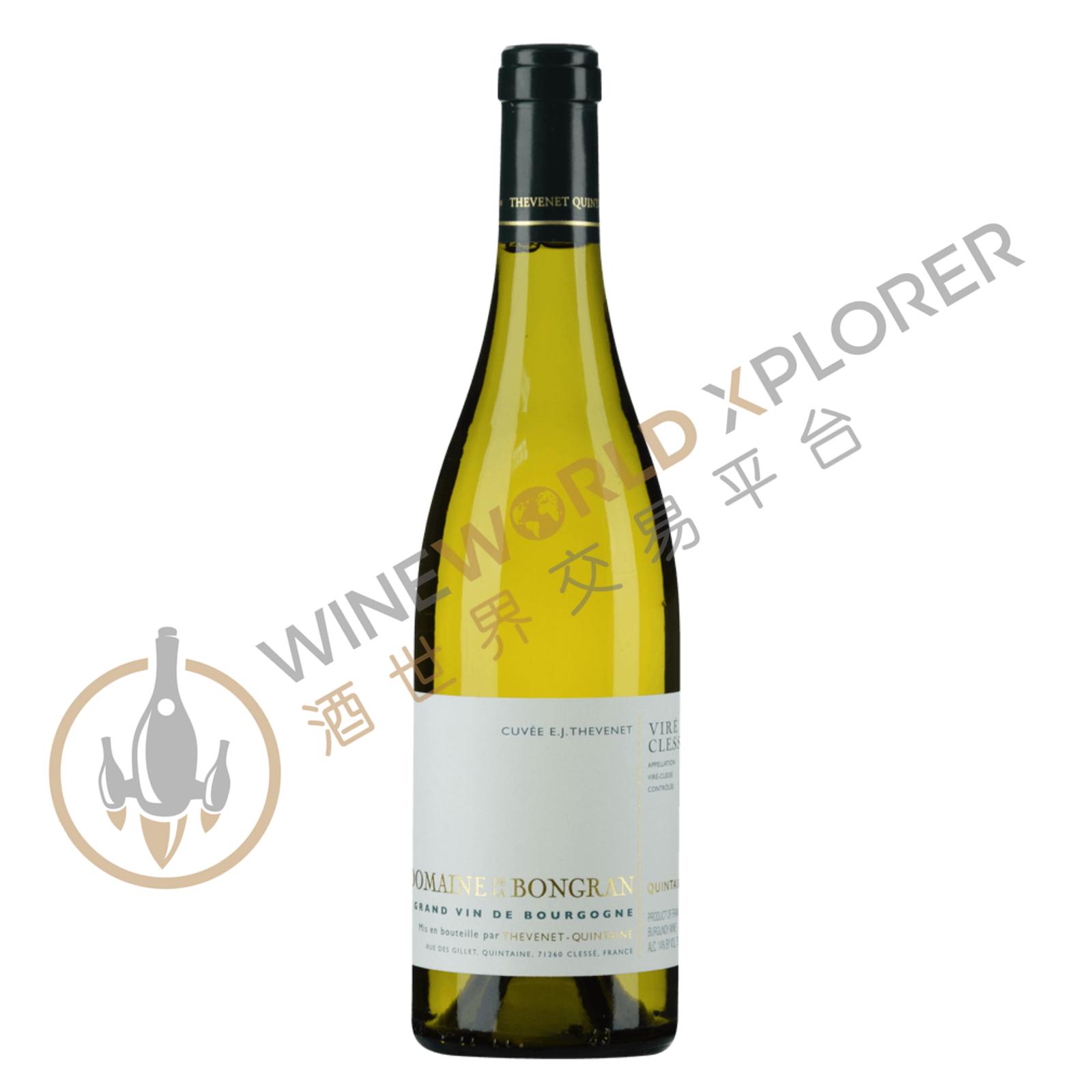
Domaine de la Bongran (Thevenet Quintaine), Vire Clesse Cuvee EJ Thevenet 2013
 View analysis


Description
About the Producer
Domaine de la Bongran derives its name from "good food," inspired by the founder's father. During his studies, Jean Thévenet read Les vendanges à Clessé en Mâconnais au XIXème siècle (1932) and Congrès des sociétés savantes de Bourgogne (1938), which deeply enlightened him to the idea that truly good wine does not require new barrels to enhance its flavor. Robert Parker praised Jean Thévenet, stating that the white wines he produces are concentrated in flavor, with strong and lasting floral and fruity aromas. He also described Domaine de la Bongran as producing the most delicate and elegant white wines in the Mâcon region, particularly highlighting their botrytis sweet wines as limited masterpieces. As an organic certified winery, Jean Thévenet practices low yields (4,000 liters per hectare) and late harvesting to ensure optimal fruit ripeness and ideal acidity. After harvesting, the grapes are whole-cluster pressed, and low-temperature fermentation is employed to allow the wine to express rich tropical fruit aromas. Jean believes that new oak barrels will alter the wine's flavor, so only old chestnut barrels are used for aging. The white wines produced mainly include the dry Cuvée Tradition, the light sweet wine Levroutée, and the botrytis sweet wine Botrytis, which is only made in exceptional years. Additionally, there are wines bottled under the name Domaine Emilian Gillet, typically sourced from vineyards in Viré-Clessé. The alcohol content of Bongran wines generally ranges from 14% to 14.5%, even for the dry whites. Jean insists on not adding sugar and employs low yields, late harvesting, and organic farming to preserve the acidity of the grapes, with all harvesting done by hand. The grapes undergo low-temperature fermentation in stainless steel or old oak barrels at approximately 15°C, allowing for the release of rich tropical fruit aromas. The fermentation process typically takes 6 to 24 months. Among these, the 2004 Viré-Clessé showcases a rich complexity, with a round and sweet palate featuring hints of white truffle and jam, fully reflecting the winery's winemaking style. In contrast, the 1999 Levroutée has entered its maturation phase, losing some of its fresh fruit character but gaining intense aromas of ripe tropical fruit.
