
 Wine Advisor



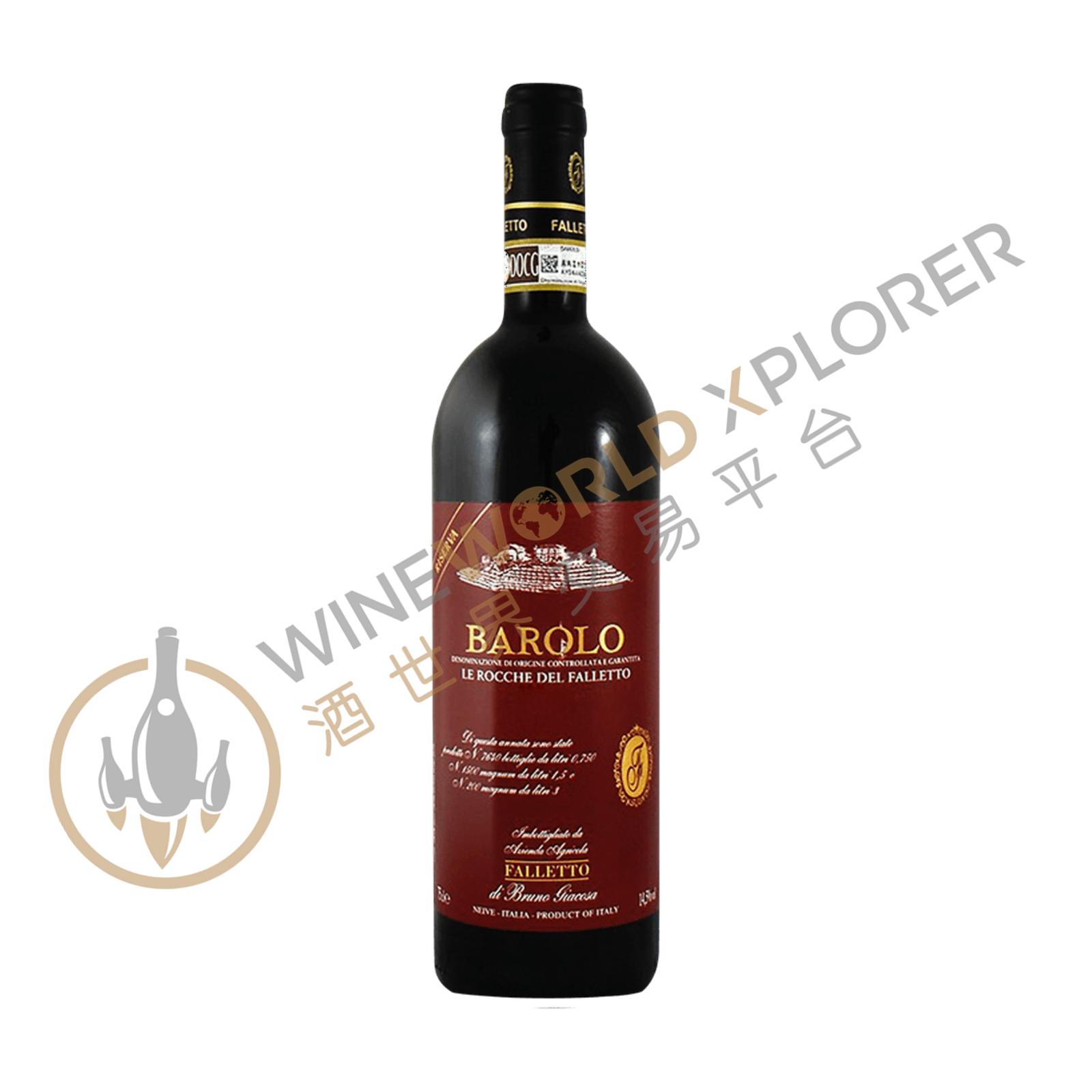
Bruno Giacosa, Barolo Le Rocche del Falletto Riserva 2014
 View analysis


Description
Tasting notes

Reviewed by: Monica Larner
This red label Riserva was made in 2012 and 2014 and will be released in 2016 and 2017. Bruna Giacosa and her team skipped over 2013 and 2015. However, the current release is the 2014 Barolo Riserva Falletto Vigna Le Rocche, and well, there's a lot to take in. Simply put, this is a beautiful wine that unfolds slowly with amazing intensity and complexity, delivering delicate notes of violets and candied orange peel that cede softly to darker tones of licorice, dried blackberry and savory spice. Give the wine the time it needs to open in the glass. This vintage flaunts its most elegant side, with fine tannins and soft fruity fiber that remains everlasting and pure. This estate is known for taking its biggest chances in the so-called off vintages. Betting on 2014 has turned out to be a brilliantly contemplated move.
Reviewed by: Antonio Galloni
The 2014 Barolo Riserva Falletto Vigna Le Rocche is a very pretty wine. Gentle and lilting in the glass, the Riserva is decidedly understated in this vintage. Sweet red cherry, mint, blood orange, spice and rose petal all open with time in the glass. In 2014, the Rocche is a mid-weight wine. It can't match the towering depth of the vintages like 1999, 2001 or 2004, but it is very nicely done and certainly a step forward. Time in the glass brings out exotic spice and citrus notes to round things out.
Reviewed by: James Suckling
The aromas are so seductive with dried roses and berries. Tar and asphalt, too. Full bodied, very tight and powerful. Lean and long tannins. It goes on for so long. Stops and then starts over again. A curious and challenging young wine. Great. In the market in 2020. Better in 2026.
About the Producer
Bruno Giacosa, located in the south and south-west of Piemonte, has been performing well for three generations, thanks to the careful selection of high quality grapes and the emphasis on traditional winemaking techniques. The vineyard covers 44.7 acres (18 hectares) and is planted with Nebbiolo d'Alba, Barbera and Dolcetto varieties. The average age of the vines is 15 years and the planting density is between 4,500 and 5,000 vines per hectare, with an average yield of 4,800 litres per hectare. In terms of winemaking, the owner has a classic quote: "For us, the philosophy of traditionalism means making wines that are not only strongly local to the vine and the grape variety, but also maintain the various local terroirs. We have always made single-variety wines. Our winemaking techniques have been improved and we also make use of gentle pressing, crushing operations, advanced rotary systems and optimised cold and hot treatment techniques." For Garcosa, technology and tradition are not necessarily at odds with each other. In the winemaking process, the grapes are first fermented in steel containers and then transferred to wooden containers for ageing, which varies slightly depending on the type of wine. Finally, the wine is bottled without filtering. The main wines produced by the winery are the Barbaresco Garina, the Barbaresco Santo Stefano, the Barbaresco Asili, the Barbaresco Wabasha and the Barbaresco Asili. Barbaresco Rabaja, Barolo Falletto and Barolo Le Rocche del Falletto. Some of the more recent vintages are 2001, 2000, 1998, 1997, 1996, 1990, 1989, 1982 and 1978. These vintages are often relatively closed and uninteresting when first bottled, but after 10 years in the cellar, they all show an irresistible magic.
