
 Wine Advisor



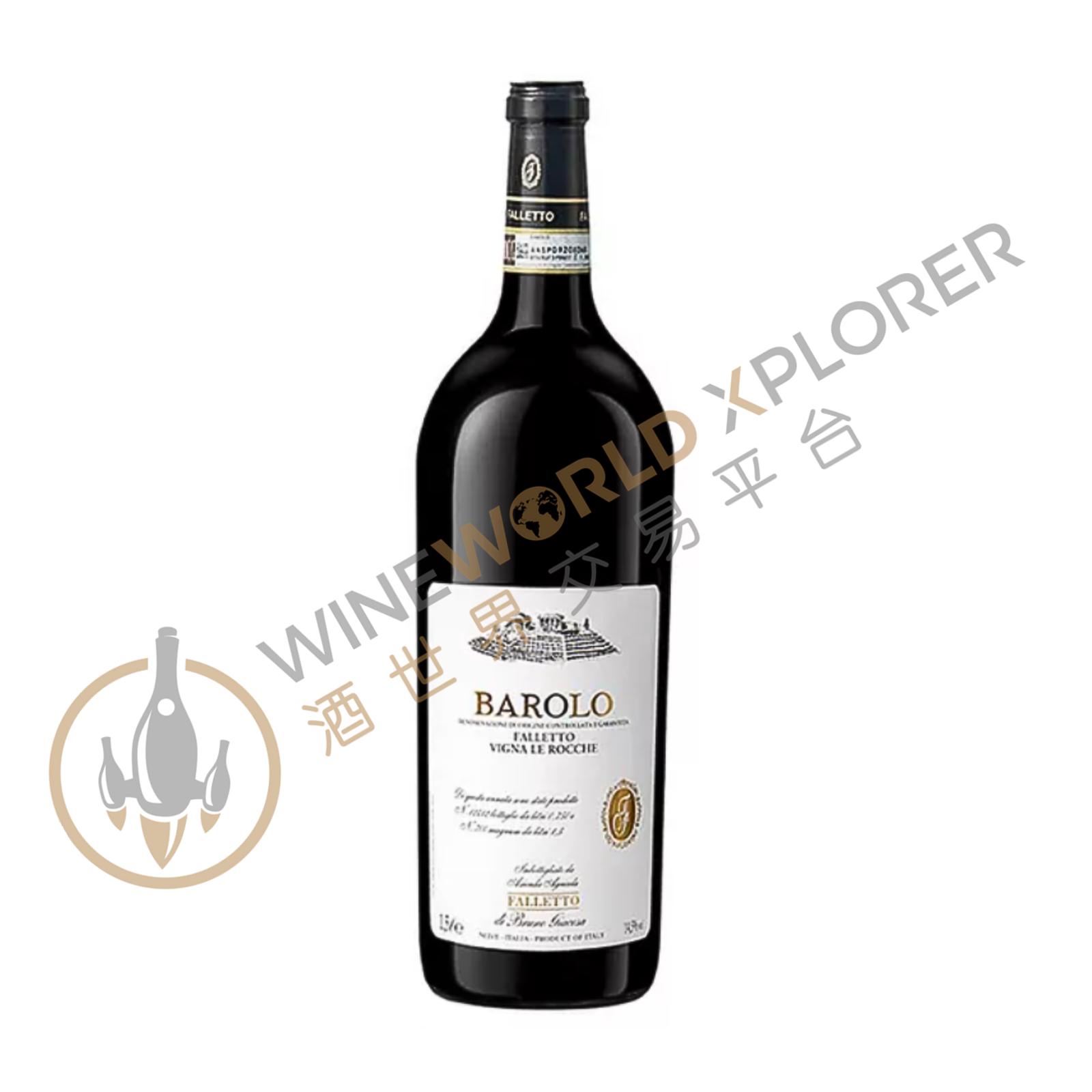
Bruno Giacosa, Barolo Falletto Vigna Le Rocche 1999
 View analysis


Description
Tasting notes

Reviewed by: Antonio Galloni
The 1999 Barolo Falleto Vigna Le Rocche opens with a sublime, classic nose of roses, tar, licorice and minerals Powerful, deep, and structured on the palate, it displays a tightly wound core of fruit with great length, much overall balance and a certain nobility in its austerity. Made in restrained style for this wine, the 1999 doesn’t initially show the opulence of vintages 1997, 1998 and 2000 nor the imposing structure of the 1996 Riserva Falletto or the 2001 Riserva Le Rocche del Falletto, remaining somewhere in the middle. Over the course of several days, however, the luxuriousness of its fruit gradually emerged. Still, readers will have to be patient with this wine. It will provide immense pleasure to those who appreciate classically structured, quintessential Barolo and it should drink well until age thirty, and likely beyond. A great effort and one the best relative values among this producer’s recent releases. An Azienda Agricola Falletto di Bruno Giacosa bottling. 96/drink after 2011, 03/06 (US Importer: Winebow, New York, NY)
Reviewed by: Daniel Thomases
Darker and deeper in color than the Falletto, even more potent and penetrating on the nose, explosive on the palate with a medley of sweet fruit, licorice, mint, chocolate, and tar, the full-throttle 1999 Barolo Falleto Vigna Le Rocche is tightly wound but oh so sumptuous and rich on the finish and aftertaste. It rivals the legendary 1996 Barolo Falletto Riserva. Anticipated maturity: 2006-2035. A Leonardo Locascio Selection, Winebow, Hohokus, NJ; tel. (201) 445-0620
About the Producer
Bruno Giacosa, located in the south and south-west of Piemonte, has been performing well for three generations, thanks to the careful selection of high quality grapes and the emphasis on traditional winemaking techniques. The vineyard covers 44.7 acres (18 hectares) and is planted with Nebbiolo d'Alba, Barbera and Dolcetto varieties. The average age of the vines is 15 years and the planting density is between 4,500 and 5,000 vines per hectare, with an average yield of 4,800 litres per hectare. In terms of winemaking, the owner has a classic quote: "For us, the philosophy of traditionalism means making wines that are not only strongly local to the vine and the grape variety, but also maintain the various local terroirs. We have always made single-variety wines. Our winemaking techniques have been improved and we also make use of gentle pressing, crushing operations, advanced rotary systems and optimised cold and hot treatment techniques." For Garcosa, technology and tradition are not necessarily at odds with each other. In the winemaking process, the grapes are first fermented in steel containers and then transferred to wooden containers for ageing, which varies slightly depending on the type of wine. Finally, the wine is bottled without filtering. The main wines produced by the winery are the Barbaresco Garina, the Barbaresco Santo Stefano, the Barbaresco Asili, the Barbaresco Wabasha and the Barbaresco Asili. Barbaresco Rabaja, Barolo Falletto and Barolo Le Rocche del Falletto. Some of the more recent vintages are 2001, 2000, 1998, 1997, 1996, 1990, 1989, 1982 and 1978. These vintages are often relatively closed and uninteresting when first bottled, but after 10 years in the cellar, they all show an irresistible magic.
