
 Wine Advisor



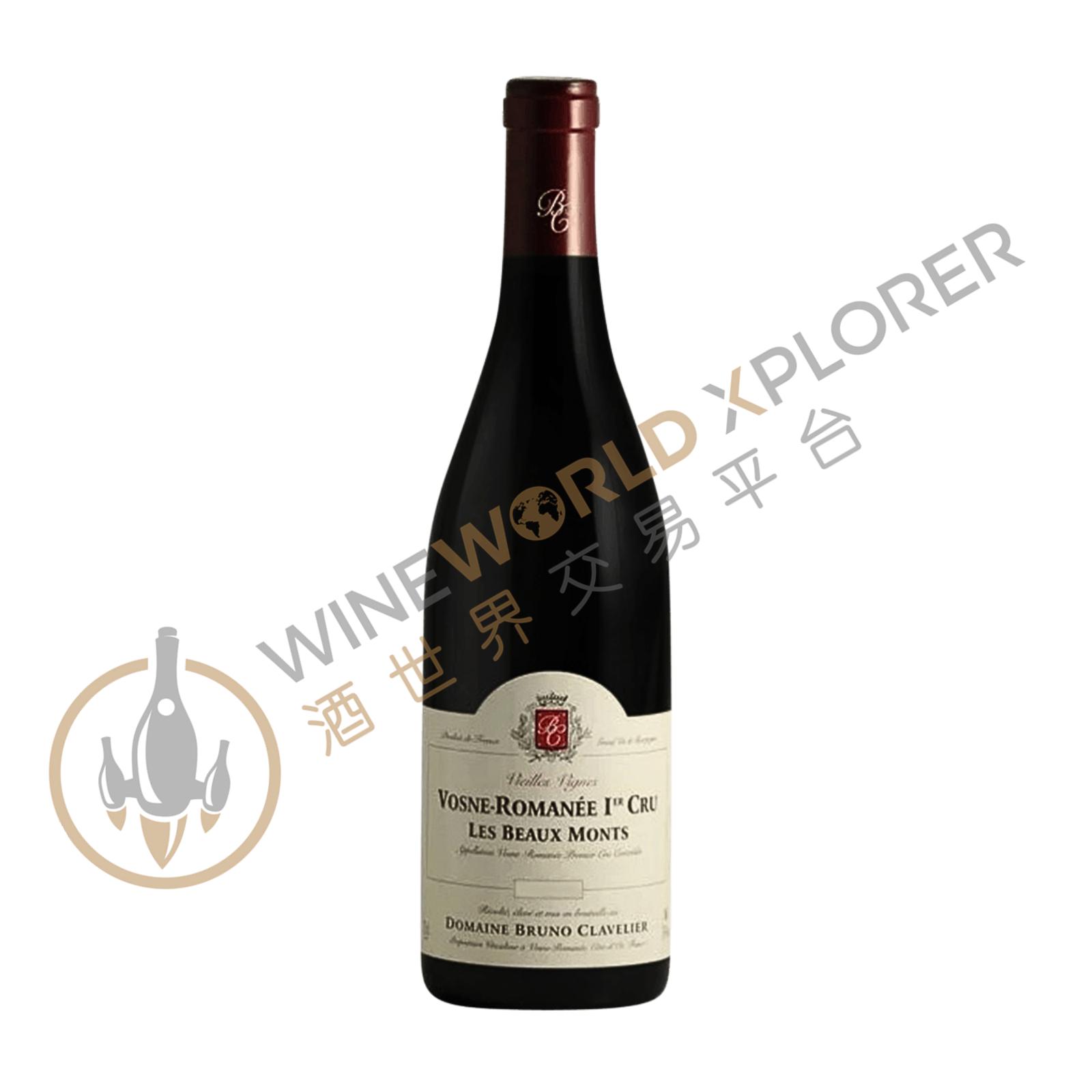
Bruno Clavelier, Vosne Romanee 1er Cru Les Beaux Monts Vieilles Vignes 2013
 View analysis


Description
Tasting notes

Reviewed by: Neal Martin
The 2013 Nuits St Georges Aux Cras comes from 80- to 85-year-old vines and has a broody blackberry and raspberry bouquet, stony and reserved. The palate is succulent on the entry, sweet and playful with candied orange peel governing the harmonious finish. This has a lovely exotic streak, which is an absolute delight. Check this out.
Reviewed by: Neal Martin
The 2013 Vosne Romanee 1er Cru les Beaux Monts Vieilles Vignes has a well-defined, mineral-led bouquet with lifted, perfumed blackberry and kirsch scents, hints of limestone just underneath. The palate is medium-bodied with fine, slightly sappy black cherry and raspberry fruit leading to a harmonious and svelte finish. This is a little more structured than the Aux Brûlées at this stage and will probably require a little more bottle age.
Reviewed by: Neal Martin
The 2013 Corton Le Rognet Grand Cru has a very focused and delineated bouquet with blackberry, raspberry and mineral scents–a touch of the old sea cave here. The palate is more red fruit than black–underpinned by fine tannin, hints of brown spice and cloves emerging toward the finish that fans out with some panache. This is well worth seeking out–a succinctly crafted Corton Rognet that should give a couple of decades worth of pleasure.
Reviewed by: Neal Martin
The 2013 Vosne Romanée 1er Cru Aux Brûlées, which sees one-third new oak, has a tightly knit bouquet with hints of licorice infusing the mixture of red and black fruit, again, the oak nicely integrated. The palate is medium-bodied with pastille-like purity, very fine and almost weightless tannin that means this really just glides across the mouth, with just sufficient edginess on the finish to maintain tension. This is a sensual Aux Brûlées.
Reviewed by: Neal Martin
The 2013 Chambolle Musigny la Combe d’Orveaux offers a cheeky hint of truffle on the nose that is well defined, touches of flint coming through with time, quite complex and mercurial. The palate is nicely structured, a little more masculine, with an appealing grainy texture, fine mineralité and commendable precision on the finish. This is a neat ‘n' tidy Chambolle that should age well over 10-15 years.
Reviewed by: Stephen Tanzer
(this parcel faces south/southeast and thus gets less afternoon sun; there's some clay in the soil, as with the Hautes Maizières): Bright, full red. Open-knit aromas of redcurrant, raspberry and tobacco. Silky and full but with lovely inner-mouth clarity and lift. The red fruit flavors are complicated by notes of licorice and menthol. Dense, sappy, rather youthfully compact wine, with a firm spine of tannins to support a graceful evolution in bottle. I'd open the comparatively sensual Brûlées first.
About the Producer
Domaine Bruno Clavelier is located in the Vosne-Romanee region of the Cote de Nuits in Burgundy, France. This region is known for producing some of the finest and most expensive Pinot Noirs in the world, and is the source of the famous Romanee Conti. Founded in the late 18th century, the estate suffered from phylloxera, downy mildew and powdery mildew from 1935 to 1955, before gradually developing under the leadership of Joseph Brosson, and in 1935 it was run by Antoine Clavelier, whose dedication to quality made the estate famous. In 1987, the winery was taken over by Antoine's son Bruno Clavelier, a former rugby player who went on to study winemaking at the University of Dijon. His knowledge of the region's geography and climate, as well as viticultural techniques and the characteristics of French oak, enabled him to bring the winery into the ranks of Burgundy's finest wines, and in 2003 his wife, Valerie, joined him. The vineyards are located in the Vaughan-Romanée, Chambolle-Musigny, Corton-Rognet and Nuits-Saint-Georges regions. The vines in the vineyards were replanted after the phylloxera outbreak of 1930-1940 and are mostly Pinot Noir vines over 80 years old. These old vines produce very limited yields and have deep roots, allowing them to absorb the minerals in the soil. The vines are cultivated using traditional methods and biodynamic methods, with only a small amount of organic fertiliser. In addition, the vineyard uses capsules containing female moth pheromones to interfere with moth reproduction in order to reduce pest infestation and avoid the use of insecticides. The winery's philosophy is to minimise human intervention so that the wines can perfectly reflect the terroir of the region. The grapes are selected and harvested by hand during the harvest season. The grapes are returned to the cellar in small baskets for secondary sorting. Depending on the characteristics of the vineyard and the vintage, around 5-20% of the grapes are kept whole, while the rest are destemmed. The grapes are then poured into conical oak barrels and gently pressed by hand to extract the flavours from the skins. The fermentation process lasts around 3 weeks and the wine is monitored at regular intervals twice a day. After fermentation, the wine is stored in oak barrels from the Troncais and Allier regions of France for 16 to 18 months. The wines are then bottled in the cellar at a time to suit the season and weather conditions. The wines are not filtered or clarified before bottling and are filled with inert gas after bottling to maximise the aromas of the wines. The wines of Vosne-Romanee La Combe Brulee, Vosne-Romanee Les Hautes Maizieres Vieilles Vignes and Aux Brulees Vieilles Vignes have won many awards. The 2009 vintage of Aux Brulees Vieilles Vignes was awarded 94 points by Wine Spectate.
