
 Wine Advisor



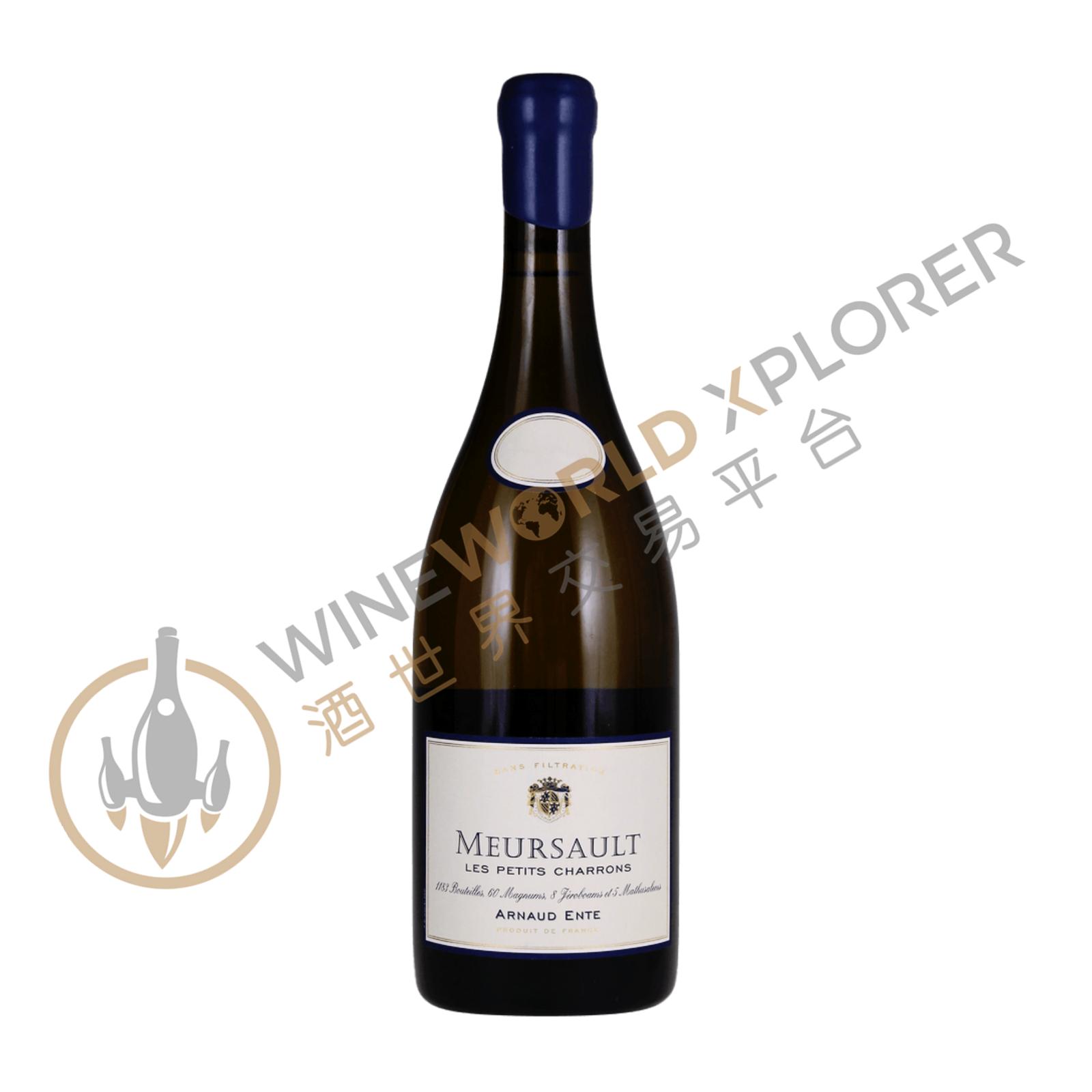
Arnaud Ente, Meursault Les Petits Charrons 2010
 View analysis


Description
Tasting notes

Reviewed by: Antonio Galloni
The 2010 Meursault Les Petits Charrons is all about energy and focus. Today, it is a bit clenched, yet there is an inner sweetness that is quite appealing. It will be interesting to see where this goes over the next few years. Stylistically, the Petits Charrons is more overt and obvious than most of the other wines in the lineup. There is plenty of weight, but a little less finesse than the best wines, although that is admittedly splitting hairs at this level. Ente farms two parcels here; one planted in 1958, the second in 1992.
Reviewed by: Stephen Tanzer
Bright pale yellow. Pure, lively lemon and pineapple aromas. At once silky and citrussy, offering lovely finesse and inner-mouth perfume to its flavors of lemon and white flowers. Harmonious acidity gives shape and sappiness to this opulent wine. Very long on the aftertaste. The Petits Charrons and Puligny Referts never give much crop due to millerandage, notes Ente. An uncommonly refined village wine.
Reviewed by: Stephen Tanzer
Bright pale yellow. Reticent nose hints at lemon drop. Quite tight and minerally in the mouth, showing less easy sweetness than the Clos des Ambres in spite of its slightly exotic orange and honey flavors. Very imploded today, and increasingly citrussy toward the back. Finishes quite tight. A rich but very elegant style, from lighter soil.
Reviewed by: Antonio Galloni
The 2010 Meursault Les Petits Charrons is all about energy and focus. Today, it is a bit clenched, yet there is an inner sweetness that is quite appealing. It will be interesting to see where this goes over the next few years. Stylistically, the Petits Charrons is more overt and obvious than most of the other wines in the lineup. There is plenty of weight, but a little less finesse than the best wines, although that is admittedly splitting hairs at this level. Ente farms two parcels here; one planted in 1958, the second in 1992. Anticipated maturity: 2012+. (Not yet released) This is a stunning set of wines from Arnaud Ente. The 2010s stand out for their transparency, expressiveness and purity. Ente began bringing in his wines on September 15. Yields were down about 30% on average. Ente gave the 2010s 12 months in oak followed by 7-8 months in steel. The wines were all bottled in April 2012. There are a handful of more famous domaines in Meursault, but few that can equal the level of the stunning wines found at this small, family run estate that captures the essence of the Burgundian vigneron spirit. Importer: Kermit Lynch Wine Merchant, Berkeley, CA; tel. (510) 524-1524
Reviewed by: Antonio Galloni
Bright pale yellow. Reticent nose hints at lemon drop. Quite tight and minerally in the mouth, showing less easy sweetness than the Clos des Ambres in spite of its slightly exotic orange and honey flavors. Very imploded today, and increasingly citrussy toward the back. Finishes quite tight. A rich but very elegant style, from lighter soil.
About the Producer
Arnaud Ente left Coche Dury, the god of white wine, in 1991 to establish his own winery! After 20 years of hard work, after winning the French Wine of the Year Person of the Year in 2012, the reputation has gradually been competed by lovers of pure and meticulous white wine go! Mr. Michel Bettane has pointed out that in his nearly 30 years of wine evaluation, the only white wine that has given him praise and surprises turned out to be Arnaud Ente's Bourgogne Aligoté, he now thinks this should be a Grand Cru. The vineyard of Chateau Arnoant is less than 5 hectares, not only does it not have any grand crus, but 80% of the plots are Bourgogne and Village. Regardless of the grade of the plot, Arnaud Ente takes care of it in the same way, using the Lutte Raisonnée method, which strictly controls the yield to improve the quality of the grapes. Take 2012 as an example, the average output per hectare of the entire winery is only 1,900 liters, about 2,500 bottles, and some wines even have only 600 liters of output, such as Meursault Clos des Ambres with an average vine age of more than 50 years. This way of strictly controlling production is definitely the only way he can make great wines. Another standout is that the harvest is brought forward in order to obtain finer grapes. There is better, beautiful acidity in the harvested grapes, giving the wine more layer, variety, and complexity.
